Automates & Merveilles
The «Automates & Merveilles» association presents plans for an exhibition: «One Exhibition, 3 Cities, 3 Museums»
The idea of an exhibition germinated from the presence of the historic automata constructed by Pierre and Henri-Louis Jaquet-Droz in the collections of the Musée d’art et d’histoire de Neuchâtel and the latter’s desire to gain more scientific knowledge about these creative geniuses and the world of clockwork automata.
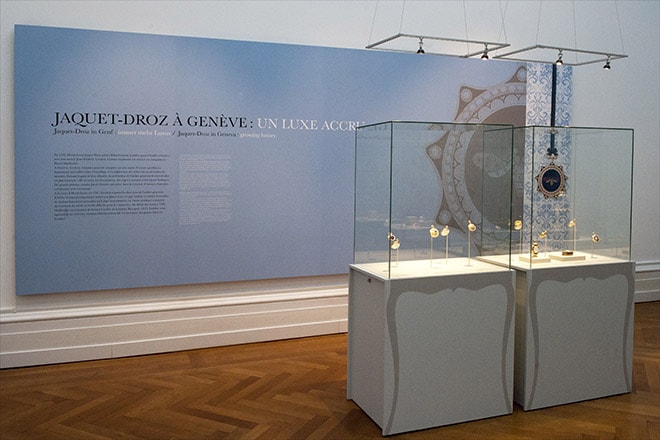
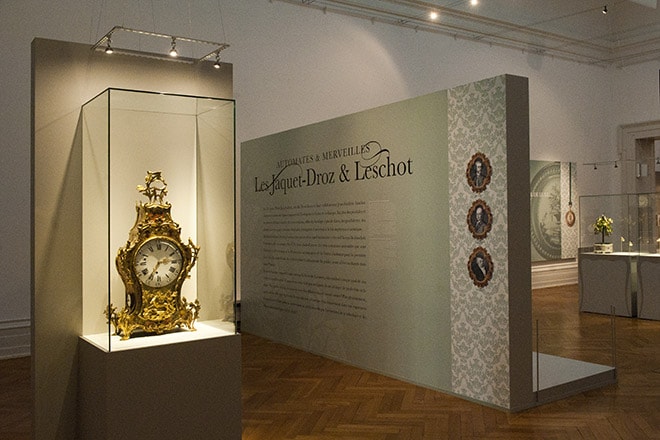
The Musée d’art et d’histoire de Neuchâtel, the Musée international d’horlogerie de La Chaux-de-Fonds and the Musée d’horlogerie du Locle – Château des Monts came together to present an exhibition on three outstanding masters of 18th-century clockmaking: Pierre Jaquet-Droz, his son Henri-Louis and their colleague Jean-Frédéric Leschot.
Originally from the Neuchâtel Mountains, the Jaquet-Droz father and son team made a reputation for themselves as brilliant inventors and astute businessmen. They were famous in Europe and world-wide for producing luxury goods characterized by the purity and elegance of their design. Among these remarkable objects were pieces of jewelry with miniaturized mechanisms, musical clockwork automata, such as singing birds, and clocks with automata, including humanoid automata.
To highlight the Jaquet-Droz and Leschot genius, as well as their quest for answers – something that connects them to today’s world – the three museums decided to share their expertise and collections in order to mount an exhibition enriched by many exceptional pieces on loan from private and public collections. Presented simultaneously at all three institutions and in three languages (French, German and English), this international artistic and technical event will take the visitor from the 18th to the 21st century.

The exhibition
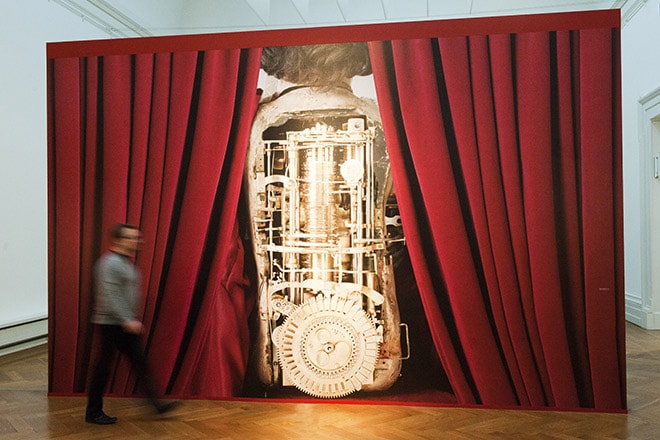
The Automates & Merveilles exhibition will be divided into three sections. Each museum will explore one aspect of the life and times of the Jaquet-Droz family that is covered by its own collections. It will use one of the three humanoid automata preserved at the Musée d’art et d’histoire de Neuchâtel to introduce this aspect. Two of the automata will relocate from their home museum to partner museums for the occasion.
Neuchâtel, Musée d’art et d’histoire
Automates & Merveilles: The Jaquet-Droz family and Leschot
Who were the Jaquet-Droz and Leschot? How did they come to start their business? How did they conquer the world, expanding from La Chaux-de-Fonds to Geneva, London and Paris? What role did automata play in their collection of pieces intended for the luxury market? More generally, how were automata used in the 18th century as tools for scientific and philosophic research? What do these automata have in common with the robots of today and tomorrow? These are some of the questions that the Musée d’art et d’histoire de Neuchâtel (MAHN) will be addressing in its section of the exhibition.
The Jaquet-Droz automaton to be shown in Neuchâtel: The Writer by Pierre Jaquet-Droz
La Chaux-de-Fonds, Musée international d’horlogerie
Automates & Merveilles: Marvellous movements... amazing mechanisms
One thematic highlight is automated musical production. Musical boxes, musical automata, street organs, mechanical musical instruments and all kinds of chimes and glockenspiels will amaze visitors. Designed to evoke surprise and astonishment, the exhibition will lead the visitor past mystery clocks, perpetual motion mechanisms and «celestial» automata such as planetariums and clocks indicating complex astronomical information. Indeed, the main objective of the temporary exhibition at the Musée international d’horlogerie (MIH) will be to amaze, astonish and surprise visitors.
The Jaquet-Droz automaton in La Chaux-de-Fonds: The Musician by Henri-Louis Jaquet-Droz
Le Locle, Musée d’horlogerie – Château des Monts
Automates & Merveilles: Masterpieces of luxury and miniaturization
Starting in the second half of the 18th century, the miniaturization of mechanical and musical movements gave rise to a new industry. Pierre Jaquet-Droz and his son Henri-Louis occupied a prominent position in this field. The exhibition will present the master clockmakers that worked with the Jaquet-Droz and the heirs to this tradition by tracing their relationships. By miniaturizing mechanisms, these craftsmen were able to incorporate singing birds, musical boxes or animated scenes into all kinds of objects (e.g. watches, pistols, cages and snuff boxes). They also excelled in the creation of humanoid automata and small mechanical animals. Miniaturization and precious decoration are the key topics developed by the Musée d’horlogerie du Locle (MHL).
The Jaquet-Droz automaton in Le Locle: The Draughtsman by Henri-Louis Jaquet-Droz
Related news

Breguet Marine 5517 and 5527 in a new light
The Marine collection has its origins in one of the most emblematic chapters in Breguet's history. From the end of the eighteenth century, Abraham-Louis Breguet designed his timepieces as true scientific instruments, where their precision, reliability and legibility met the demands of the time. A quest for excellence found major recognition in…

Breguet: 225 years since the invention of the Tourbillon
In 2026, Breguet pays tribute to the invention of the Tourbillon, for which Abraham-Louis Breguet was granted his historic patent on 7 Messidor Year 9 according to the French revolutionary calendar, corresponding to 26 June 1801. This means that this eminent complication has been an enduring part of day-to-day life for the Manufacture Breguet, its…

Breguet Classique 7225
In 1802, Abraham-Louis Breguet undertook construction of a series of five timepieces featuring several devices designed to improve precision, in particular a tourbillon associated to natural escapement. These creations represented the pinnacle of what the master watchmaker could offer his clients in terms of timekeeping. Today, as part of its…