Sustainability strategy
GRI 2–12
Corporate responsibility
Swatch Group is committed to safeguarding its continued development, while also protecting the environment and guaranteeing the health and safety of individuals. The company endeavors to do the best it can in all areas and at all levels of the company to fulfill this responsibility. The Group’s aim is to create value for its stakeholders, the environment and society as a whole.
Environmental, ethical and social criteria have therefore always been an integral part of its corporate culture and its sourcing policy. The Executive Group Management Board, the Extended Group Management Board and the management teams at the individual units continually ensure that they demonstrate what this culture of responsibility looks like and that all employees at all levels continually share and practice this approach. Swatch Group strives to ensure that resources are used efficiently and sparingly to guarantee that its products are manufactured and marketed in a sustainable and environmentally friendly manner, and thereby secure its long-term success. The use of recycled, recyclable, certified and / or environmentally friendly materials, consumer goods and production methods are the basis for all product development.
In 2001, Swatch Group began to set clear climate and efficiency targets and implement effective measures throughout the Group in order to play its part in preserving the environment. A further stage was completed in 2022, with the development and release of a roadmap for achieving Group-wide carbon neutrality in Scopes 1 and 2 by 2050.
Alongside this important progress, the Group is working to update its materiality concept and has introduced an opportunity and risk management system for this purpose. Increased measurement of Scope 3 emissions and a stronger operational risk management approach in the area of human rights are two further significant areas of work on the long list of projects and activities that the Group’s sustainability officers are pursuing in their various units.
Commitment to the Sustainable Development Goals (SDGs)
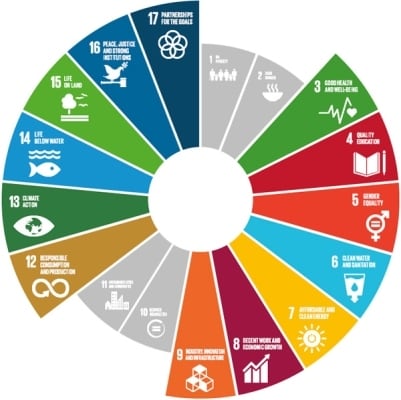
Swatch Group seeks to meet the needs of the current generation without jeopardizing the ability of future generations to meet their own. The company’s sustainability management approach is based on the United Nations’ 2030 Agenda, which was adopted by the UN Member States. The 17 Sustainable Development Goals (SDGs) at the core of the 2030 Agenda form the international and universally applicable framework for sustainable development. Every SDG is essential to securing the prosperity of people and the planet. Swatch Group has identified 13 SDGs that are especially relevant to the company and its stakeholders. The company actively contributes to achieving these goals. It has defined its commitments, and it will continue to refine them on an ongoing basis, by adding goals, actions and performance indicators.
A full overview on the Swatch Group's commitments to the SDGs can be found on pages 10 and 11 of the 2025 Sustainability Report.
GRI 2–6
VALUE CHAIN
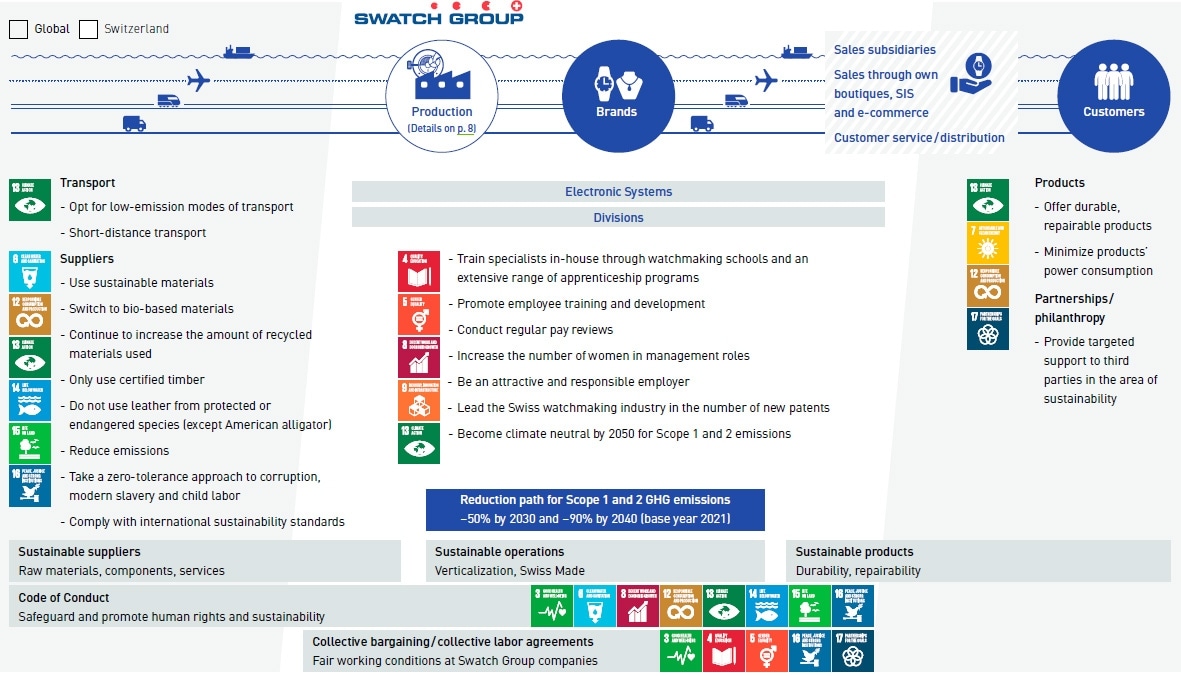
Value Chain (simplified visual representation)
Production Facilities
The advantages of "Swiss Made"
Nature protection. One-seventh of Switzerland’s land is protected by its 20 nature parks. In addition, around 30% of the country is made up of forested areas, and this percentage is increasing.
Water protection. Around 6% of Europe’s freshwater reserves are found in Switzerland, and a large number of major rivers have their sources in the Swiss mountains. Thanks to exemplary water pollution control, the water quality is excellent.
Renewable energy. Renewables account for around 80% of the electricity consumed in Switzerland. The country has one of the world’s lowest-emission electricity mixes.
Public transport. One of the world’s densest railway networks enables low-emission transportation of passengers and goods.
Social welfare. Switzerland has very good social insurance, which provides extensive protection for people living and working in the country and for their dependents.
Political stability and co-determination. One of the distinguishing features of Switzerland’s democracy is that citizens are not merely represented by Parliament, but can also have a direct impact on legislation.
Innovation. With a highly skilled workforce and outstanding scientific research institutions, Switzerland is one of the most innovative countries in the world.
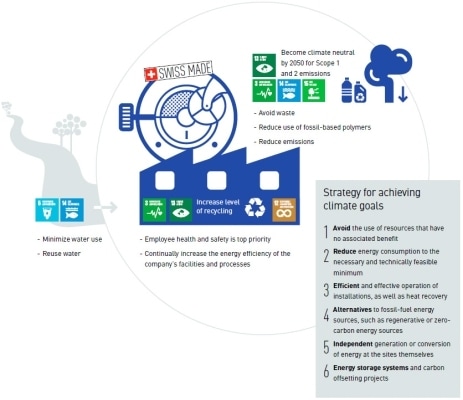
A full overview on the Swatch Group's commitments to the SDGs can be found on the pages 13 and 14 of the 2025 Sustainability Report.
| Swatch Group Sustainability SchoolIn 2025, Swatch Group continued to strengthen sustainability education across all its companies through the Swatch Group Sustainability School. The initiative, launched to equip employees with the knowledge and tools to respond to climate challenges, has now reached a significant milestone: over 15% of Swatch Group employees have completed the Group-wide foundational course. Participation spans every level of hierarchy and every type of role from sales teams and product developers to factory operators, watchmakers and support functions. A core objective of the Sustainability School is to provide learning that is directly relevant to each employee's daily responsibilities. To achieve this, we developed 15 dedicated learning paths, each tailored to a specific professional group:
These pathways build on the Group-wide foundational course by deepening employees’ understanding of climate change and offering practical guidance on how their specific activities can help mitigate carbon emissions and drive positive environmental outcomes. Throughout 2025, these learning paths were further deployed across the Group, supporting a culture where sustainability is embedded in everyday decision-making. This targeted approach ensures that employees who can have the greatest impact on the company’s sustainability performance are equipped with the right knowledge and competencies. In 2026, Swatch Group will continue to roll out the Group-wide foundational course to all employees worldwide, while intensifying advanced training for decision-makers and key functions. By empowering people across the organization, the Group is building a strong foundation for long-term progress toward its sustainability goals.
|